
What You Need to Start Crocheting: One Hook, One Yarn
The single hook and single yarn worth buying first, why light solid acrylic makes stitches visible, and the popular yarns and gadgets that make learning harder.
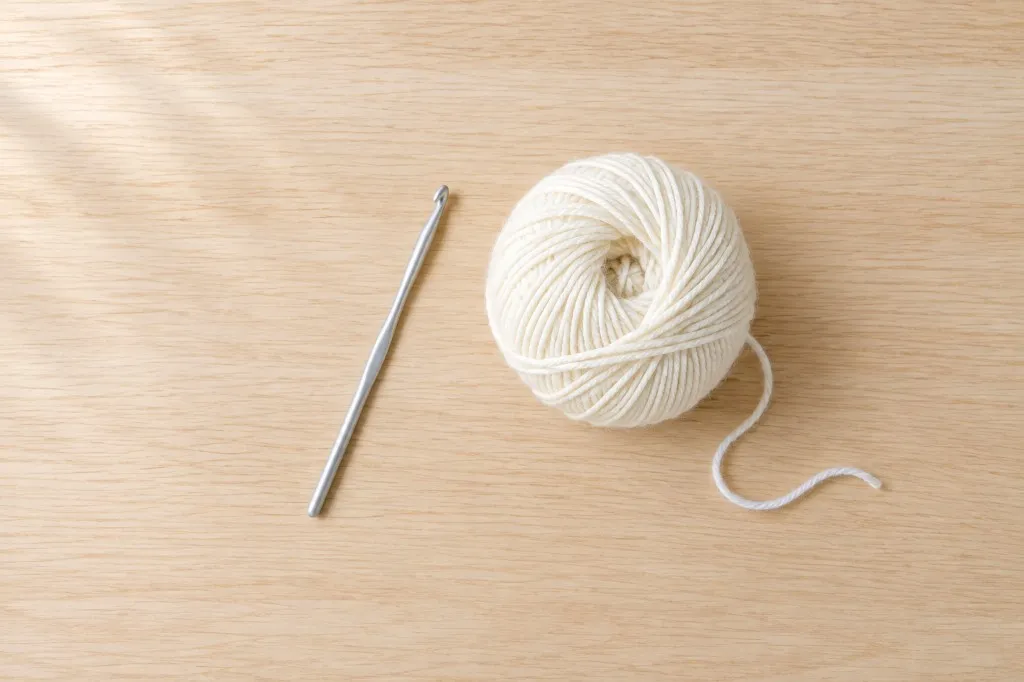
The whole answer: a 5 mm hook, which is a US size H/8, in plain aluminum, and a medium worsted acrylic in a light solid color. Together that is under ten dollars, sold in every craft store and most supermarkets, and it is the right starting point for almost everyone.
That is not a budget recommendation. This specific pairing is the one that lets you see your stitches, and being able to see your stitches is the entire difficulty of learning crochet. Everything below is for when you want to know why, or when your hands have started complaining.
Disclosure: this guide contains affiliate links where products are named, which means a purchase may earn this site a small commission at no extra cost to you. No company sent anything for review and no commission influences what is recommended here. See the disclosures page.
The hook
Why 5 mm to start
Big enough to see clearly what your hands are doing, small enough to feel like a normal hook, and it matches the medium worsted yarn that most beginner patterns assume. A 4 mm feels fiddly while you are learning and a 6.5 mm exaggerates every tension wobble.
Buy one hook, not a set. Learn on it. Then buy a set once you know whether you actually enjoy this, and by then you will know which sizes you reach for.
Head shape: the thing nobody explains
This matters more than the material, and almost no beginner is told about it.
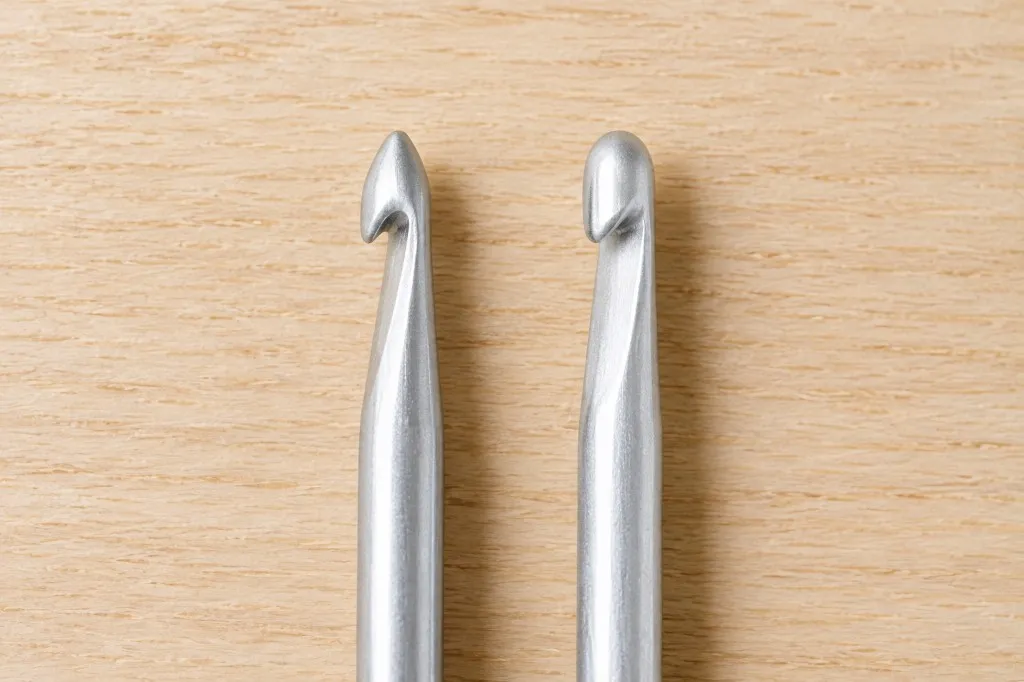
Tapered heads — the classic Boye profile — have a pointed tip and a throat that narrows gradually. The point slides into tight stitches easily, which many people prefer for dense work like amigurumi. The taper means the loop can slip forward slightly, so stitch size varies a touch more.
Inline heads — the classic Susan Bates profile — have the head sitting flush with the shaft and a flat throat. The loop sits at a consistent diameter, so stitches come out more even. Some people find the blunter tip harder to insert into tight stitches.
Neither is better. They feel genuinely different, and most crocheters develop a firm preference within a week. Susan Bates and Boye hooks are both cheap and available everywhere, so the sane move is to buy one of each in 5 mm and find out which one your hands like. That decision then applies to every hook you buy for the rest of your life.
Materials
Aluminum is the default and the right first choice. Smooth, slick, lets yarn move fast, cheap, available in every size. Standard for sizes 2.25 mm through about 10 mm.
Steel is only for thread crochet, in the very fine sizes below 2.25 mm. You need these for doilies and thread lace and for nothing else. Steel hook numbers run backwards, so a higher number means a smaller hook. The hook size chart has the full table.
Plastic and resin are mostly used above about 10 mm, where aluminum would be heavy and expensive. Light and inexpensive. Cheap plastic hooks in small sizes can have rough seams that snag yarn, so check the head with a fingernail.
Bamboo and wood are warmer to hold and slightly grippy, a real advantage with slippery yarns like silk or bamboo blends that slide off metal. Slower with ordinary acrylic. Wood hooks in small sizes can snap, so they are best from about 4 mm up.
Ergonomic hooks set an aluminum or steel hook into a thicker rubber, silicone, or resin handle. They cost several times more than a plain hook and are the single best upgrade available if you crochet for long stretches. Clover Amour and Tulip Etimo are the two most commonly recommended mid-priced ranges; Furls sits at the premium end with heavier resin and metal handles.
The yarn
The four things that make a yarn easy to learn on
Medium worsted weight (category 4). Thick enough to see, thin enough to behave normally. Almost every beginner pattern assumes it. The full weight chart is here.
A light, solid color. This is the one people ignore and regret. Cream, light grey, pale blue, soft yellow — anything where you can see the individual loops. Stitch structure is a subtle thing made of shadows, and dark yarn erases those shadows entirely.
Smooth and plied. You want a yarn made of visible twisted strands, not a fluffy or fuzzy one. Smooth yarn shows you exactly where to put the hook.
Acrylic. Springy, forgiving, machine washable, and cheap enough that frogging a project three times costs you nothing but time. Its elasticity hides tension unevenness, which as a beginner you have plenty of.
Specific yarns that fit
These are the widely available worsted acrylics that most American crocheters learn on:
- Red Heart Super Saver — the classic. Enormous skeins, very cheap, huge color range. Slightly stiff and a bit scratchy out of the ball; it softens considerably after a wash. Unbeatable for practice swatches and beginner blankets.
- Lion Brand Basic Stitch — smoother and softer than Super Saver at a modest step up in price. Very easy to work with.
- Bernat Super Value — direct competitor to Super Saver, similar price, similar behavior.
- Loops & Threads Impeccable — the Michaels house brand. Soft, smooth, good stitch definition, frequently on sale.
For dishcloths, switch to a worsted cotton. Lily Sugar’n Cream and Peaches & Creme are the standards. Cotton is absorbent and holds up to scrubbing where acrylic melts against hot pans. It is less forgiving to work with, so make it your second project rather than your first.
The five yarns that make learning harder
None of these are bad yarns. They are all genuinely lovely for the right project. They are just poor teachers, and beginners buy them constantly because they are the most attractive things on the shelf.
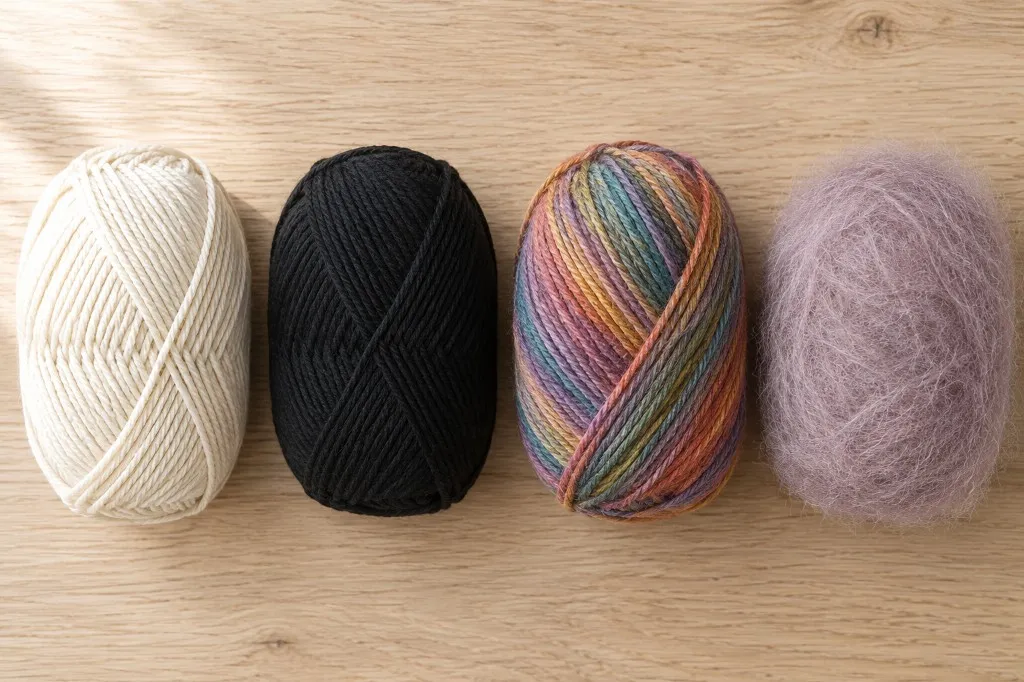
Black and very dark colors. Stitch definition disappears. You will be squinting, guessing where to insert the hook, and dropping stitches you cannot see. Experienced crocheters find dark yarn tiring; a beginner finds it defeating. Save it for your fifth project.
Variegated and self-striping yarn. The color shifts read as pattern, so you cannot tell a mistake from a color change. Beautiful in a finished object, actively confusing while you learn to count.
Chenille and velvet yarn. Extremely popular right now and genuinely difficult. It splits, it hides stitch definition almost completely, and it is prone to “worming,” where the plush surface pushes out into loops that will not sit flat. Come back to it once your tension is consistent.
Fuzzy yarn — mohair, boucle, eyelash, blanket yarn. The fuzz physically obscures the stitches. You cannot count what you cannot see, and undoing it is a nightmare because the fibers cling to each other.
Fine yarn — sock or fingering weight. Nothing wrong with the yarn, but the stitches are tiny and slow. A scarf becomes a three-month project, which is how beginners conclude they dislike crochet.
Cotton versus acrylic versus wool
Once you are past the first few projects, fiber becomes a real decision rather than a beginner concern.
Acrylic is springy with good memory, machine washable, inexpensive, and comes in every color. Best for blankets, kids’ items, amigurumi, and anything washed often. It does not breathe well and it pills over time.
Cotton is inelastic, heavy, and has no memory, meaning it stretches and stays stretched. Excellent for dishcloths, market bags, coasters, and summer tops. A cotton beanie will slowly become a cotton bucket. It gets softer with every wash.
Wool is warm, elastic, blocks beautifully, and is the most pleasant of the three to work with. Best for garments, hats, and anything shaped, because blocking lets you correct the fit. Most of it needs hand washing, though superwash wool is machine washable at the cost of some springiness.
The substitution trap: same weight does not mean same behavior. Swapping cotton for acrylic in a garment is technically possible and usually disappointing.
How much yarn to buy
Buy by yardage, not by number of skeins. Skein sizes differ enormously between brands — one company’s large skein can hold more than double another’s. Find the total yards your pattern needs, divide by the yardage on the label, add ten percent, and buy it all in one go so the dye lots match.
Rough planning figures in worsted:
| Project | Approximate yardage |
|---|---|
| Dishcloth or coasters | 75–150 yds |
| Adult beanie | 200–300 yds |
| Scarf, 60 in | 400–600 yds |
| Baby blanket | 800–1,200 yds |
| Throw blanket | 1,800–2,800 yds |
Textured stitches — bobbles, puffs, popcorns — eat considerably more yarn than plain stitches over the same area.
If your hands hurt
This is the most common reason people quit crochet, and it is usually fixable.
Start with technique, not gear. Most hand pain in crochet comes from gripping too hard, which comes from working at too tight a tension. Consciously loosen your yarn hand and let the strand run more freely. It feels sloppy for a day and then it feels normal, and the pain often just stops.
Take breaks before you need them. Twenty minutes on, a couple of minutes stretching your hands, then back. Far more effective than pushing through and then resting for a week.
Try the other grip. There are two standard ways to hold a hook: the pencil grip, held like a pen, and the knife grip, held like you are cutting food. They load your hand and wrist completely differently. If one hurts, genuinely try the other for a full session rather than a few stitches — many people find the pain simply belonged to the grip.
Then change the hook. A thicker, softer handle spreads the load across more of your hand and requires less pinch force. This is what ergonomic hooks are for, and it is a real, noticeable effect rather than marketing.
Go up a hook size and use thicker yarn. Bigger hooks and chunkier yarn mean fewer stitches for the same area, which means less repetitive motion for the same finished object.
Persistent numbness, tingling, or pain that wakes you at night is not a hook problem. Those are symptoms worth taking to a doctor rather than solving with a purchase. Crochet aggravates carpal tunnel and tendon issues; it does not cause them, and no handle fixes them.
The rest of the kit
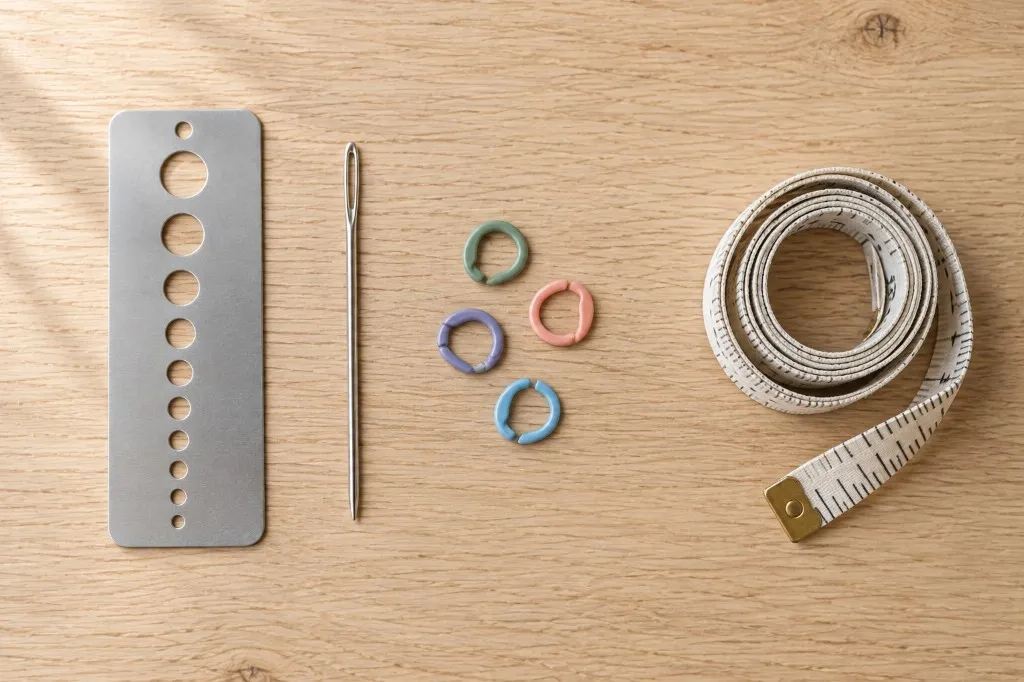
The one accessory genuinely worth buying early is a hook gauge, a small metal plate with graduated holes, for a few dollars. It tells you the true size of any hook, including the unlabeled ones inherited in a bag and the ones whose printing has worn off. Since the letter stamped on a handle is not standardized between manufacturers, and the millimeter measurement is what patterns actually mean, this settles the question permanently.
Beyond that: a blunt tapestry needle for weaving in ends, split-ring stitch markers, and a tape measure. That is the entire necessary kit.
Three things to skip at the start:
A 20-piece hook set. You will use three sizes for the first six months. Sets are good value later, once you know your head-shape preference — buying a full set before you know it means twenty hooks in a shape you may dislike.
Interchangeable or lighted hooks. Novelties. The light points the wrong way for most grips.
Expensive premium hooks. If you crochet a few hours a week, a plain aluminum hook does everything a thirty-dollar one does. Premium hooks are worth it for volume crocheters and for people managing hand pain, and not otherwise.
Where to buy
Craft chains for house brands on sale, usually the cheapest way to buy acrylic in quantity. Supermarkets and big-box stores stock the major acrylic lines at competitive prices. Local yarn shops cost more and are worth it for wool, for advice, and for actually touching a yarn before committing to a sweater’s worth. Online is best for range and for discontinued colors, with the caveat that you cannot feel it first.
One genuinely useful habit: keep the ball band. Pin it to a small swatch and keep them together in a labeled bag with any leftover yarn. Six months later, when a project needs repair, you will know exactly what it was made of and how to wash it.
Frequently asked
Does the hook brand change my gauge? Slightly, yes. Head shape and shaft taper both affect loop size, so finish a project with the hook you started it with.
Are left-handed hooks a thing? Standard hooks are symmetrical and work in either hand. Only some ergonomic handles with an asymmetric thumb rest are handed, so check that the rest is symmetrical or use a plain hook. More in the left-handed guide.
Why does my yarn keep splitting? Loosely plied or slippery yarn, plus a hook whose point is catching individual strands. Try a different head shape, and slow down slightly on the insertion.
What hook and yarn for amigurumi? Worsted acrylic or cotton with a hook smaller than the label suggests, around 3.5 mm or 4 mm. Toys need dense fabric so the stuffing does not show through.
Is cheap acrylic worth using? For a practice swatch, a kid’s blanket, or a toy, genuinely yes. For a garment you plan to wear for a decade, the fiber is most of what you would be paying for.
Can I hold two thin yarns together? Yes, and it works well — two strands of DK behave roughly like a chunky. Swatch it, because the result is never exactly what arithmetic predicts.
How long do hooks last? Aluminum and steel effectively forever. Plastic can develop a rough spot and wood can snap in small sizes. A hook that snags yarn has a burr; check the head and retire it rather than fighting it.
- hooks
- yarn
- buying guide
- beginner
- acrylic
- ergonomic