

How to Crochet a Compact No-Slip Kitchen Towel Holder
A short cotton strap with one wooden ring above it and one below. The top ring hangs on a cool hook. The bottom ring holds the towel. Stitch counts and the seam are not set yet.
A compact cotton crochet towel holder with two wooden rings, one above the other. Assembly counts are still being checked. US terms.
At a glance
- Skill level
- beginner
- Time
- See the pattern
- Finished size
- Estimated in the pattern
- Yarn weight
- Worsted cotton, dusty rose. Amount not weighed yet.
- Hook size
- 4.0 mm to start, then whatever hits gauge
- Yardage
- Estimated in the pattern
On this page
- What We’re Making: Compact Two-Ring Towel Holder
- Why This Design Is Useful
- Finished Product and Construction Overview
- Materials and Tools
- Crochet Abbreviations in US Terms
- How to Make a Slip Knot
- How to Crochet a Foundation Chain
- How to Make Half Double Crochet
- Gauge and Sizing
- Planning Your Shorter Strap
- Making the Rectangular Strap: Row-by-Row Instructions
- Attaching the Top Wooden Ring
- Attaching the Bottom Wooden Ring
- Securing and Hiding Yarn Ends
- Inserting a Towel Through the Bottom Ring
- Troubleshooting and Fit Adjustments
- Customization
- Washing and Care
- Frequently Asked Questions
- Crochet Explained Premium Printable PDF
- More Crochet Kitchen Projects
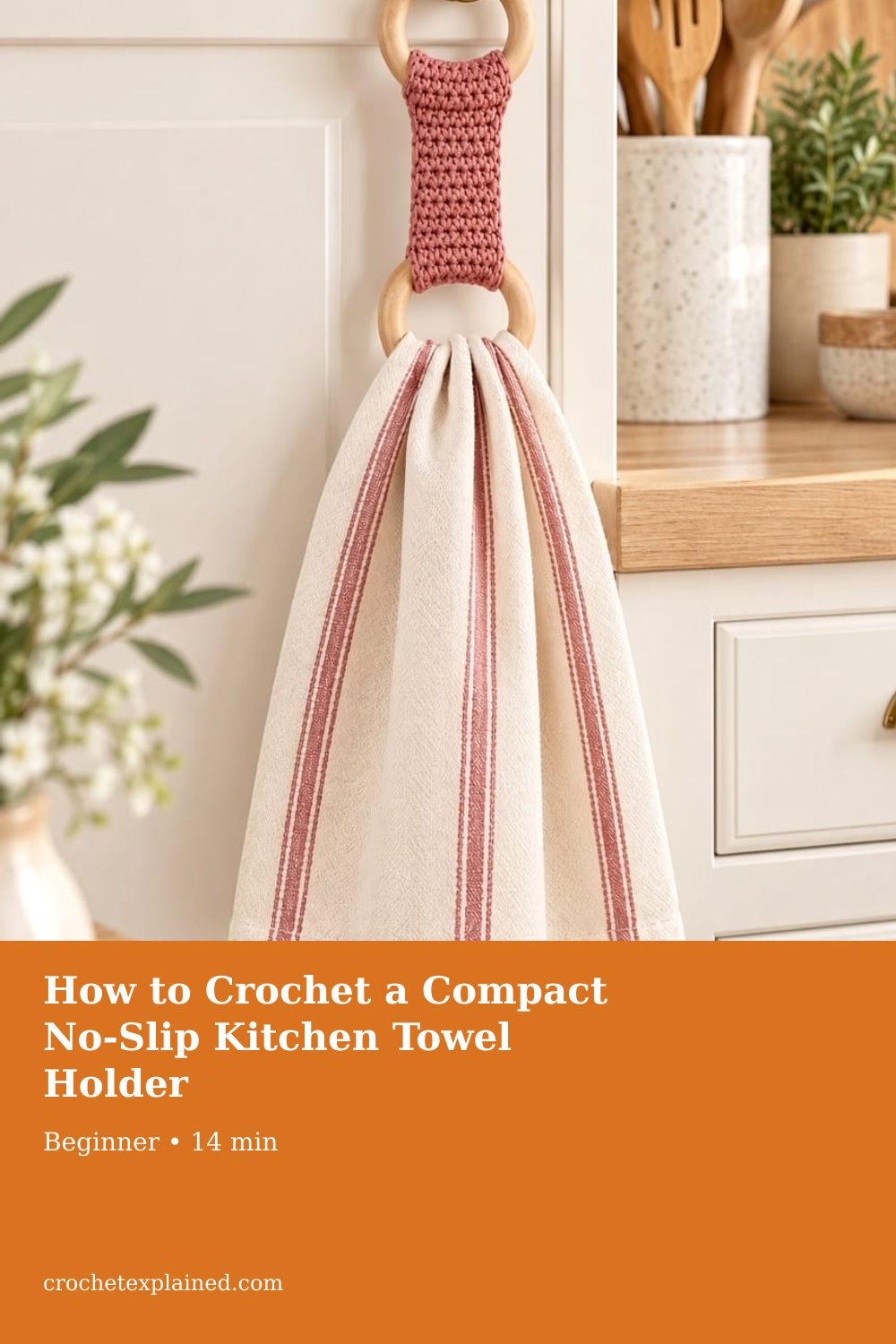
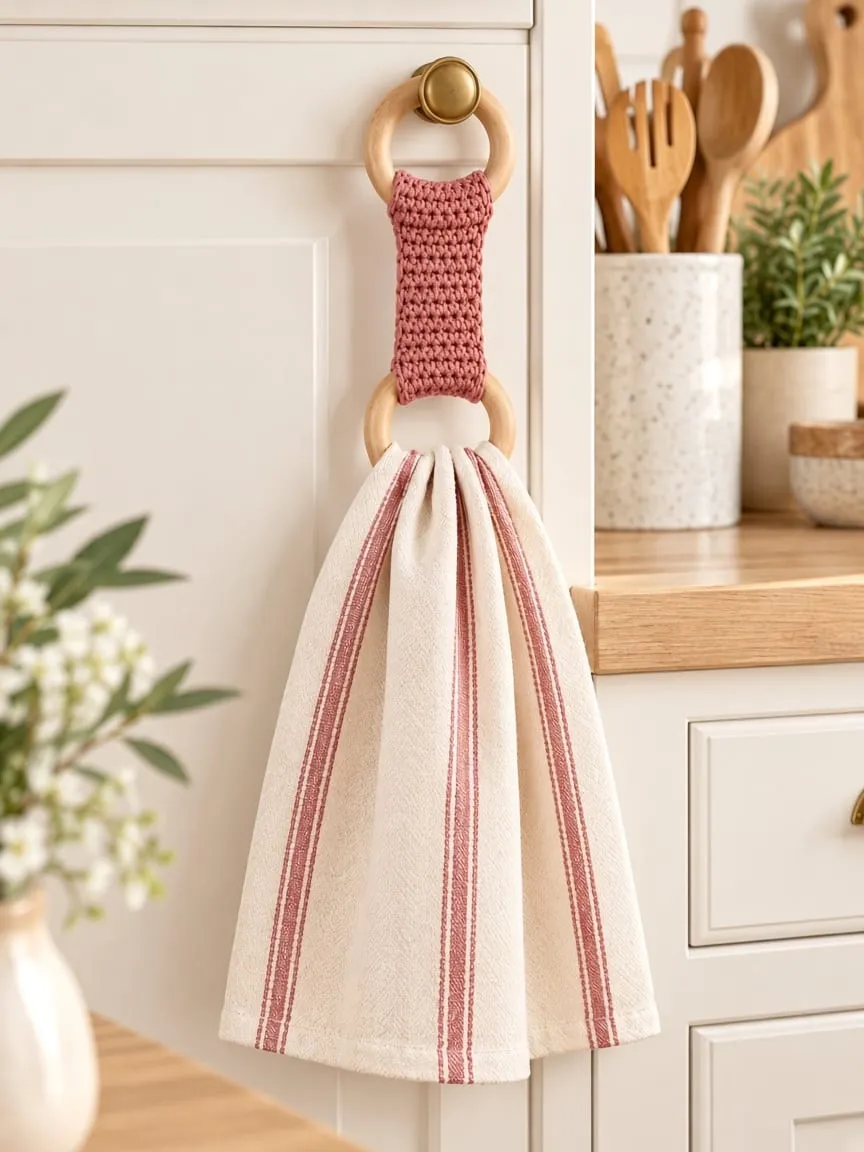
A towel on a smooth hook has nothing to hold it. This holder is a short dusty-rose cotton strap with one wooden ring at the top and one wooden ring at the bottom. The top ring is for a cool hook. The bottom ring is for the towel.
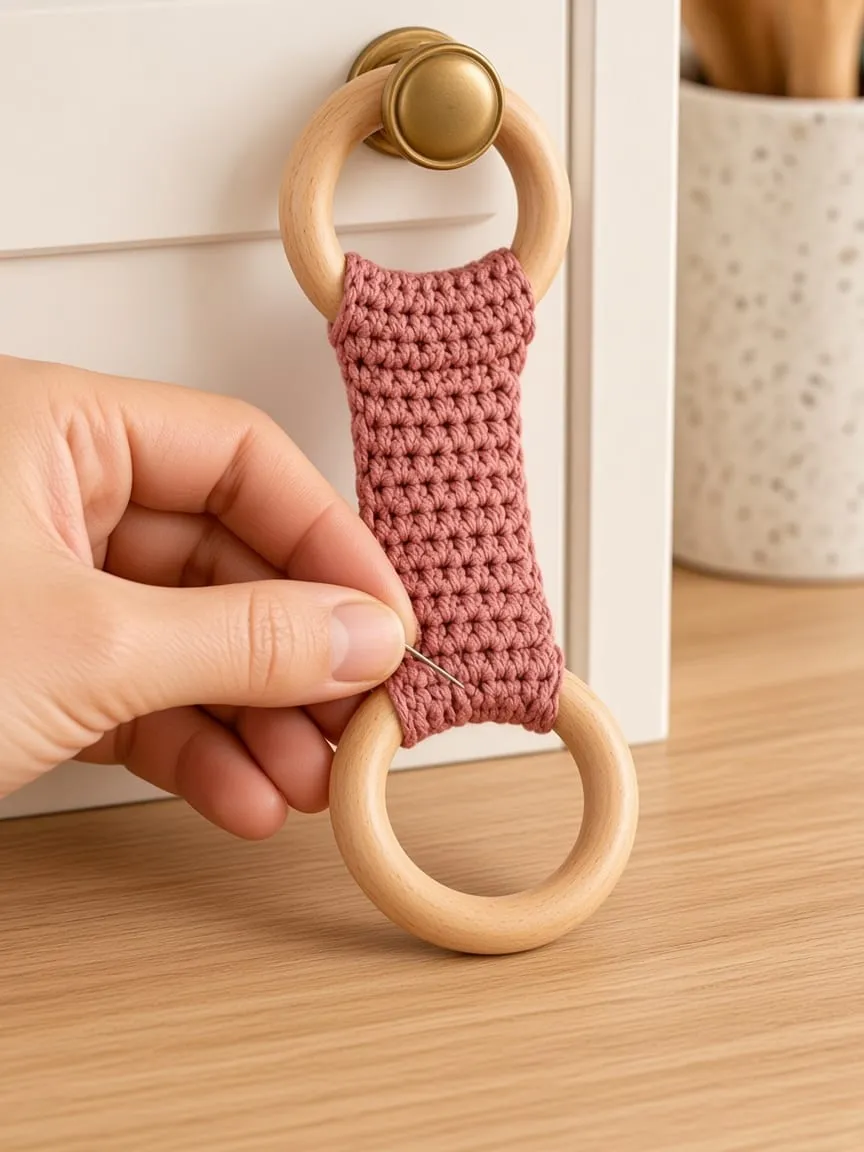
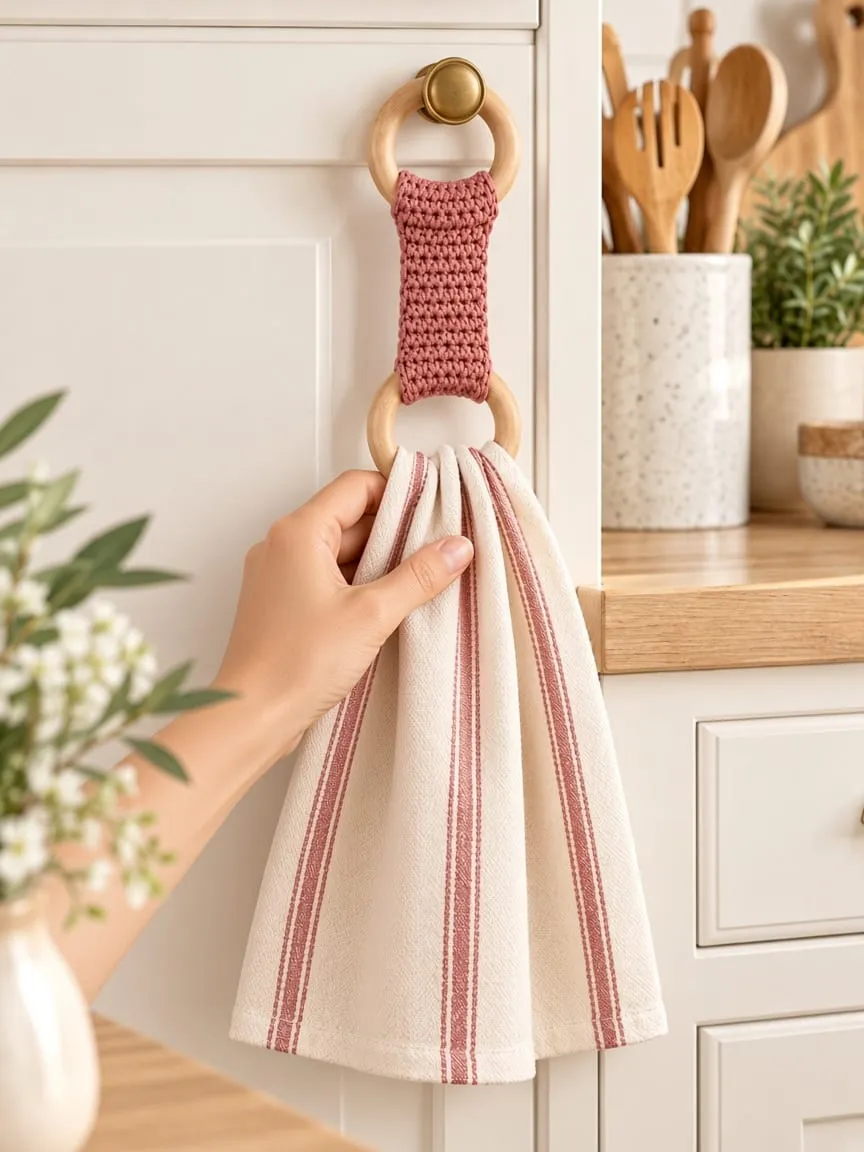
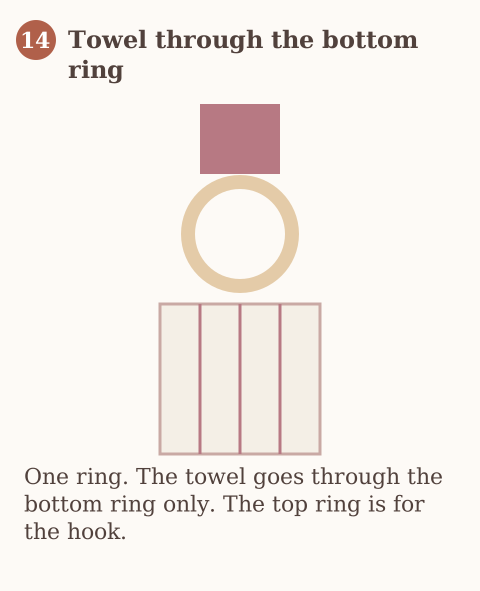
The rings are stacked. They are not side by side, and the strap does not fold over the rail. In the illustration, the hook passes through bare wood at the top of the upper ring, the strap covers the lower arc of that ring, and the towel passes through the open bottom of the lower ring.
US terms. US half double crochet is UK half treble. Stitch names are in the abbreviations chart. The picture is an illustration of the intended holder. Chain count, row count, and the ring seam are not finished, so this is not yet a pattern you can complete from the numbers alone. “No-slip” is the name of the project, not a tested claim.
Cotton can scorch. Hang this only on a cool hook or a cool handle. Do not use it on a burner, an open flame, or an oven door while the oven is on. Wooden rings are a choking hazard for small children and pets. No weight limit is stated, because none has been measured.
What We’re Making: Compact Two-Ring Towel Holder
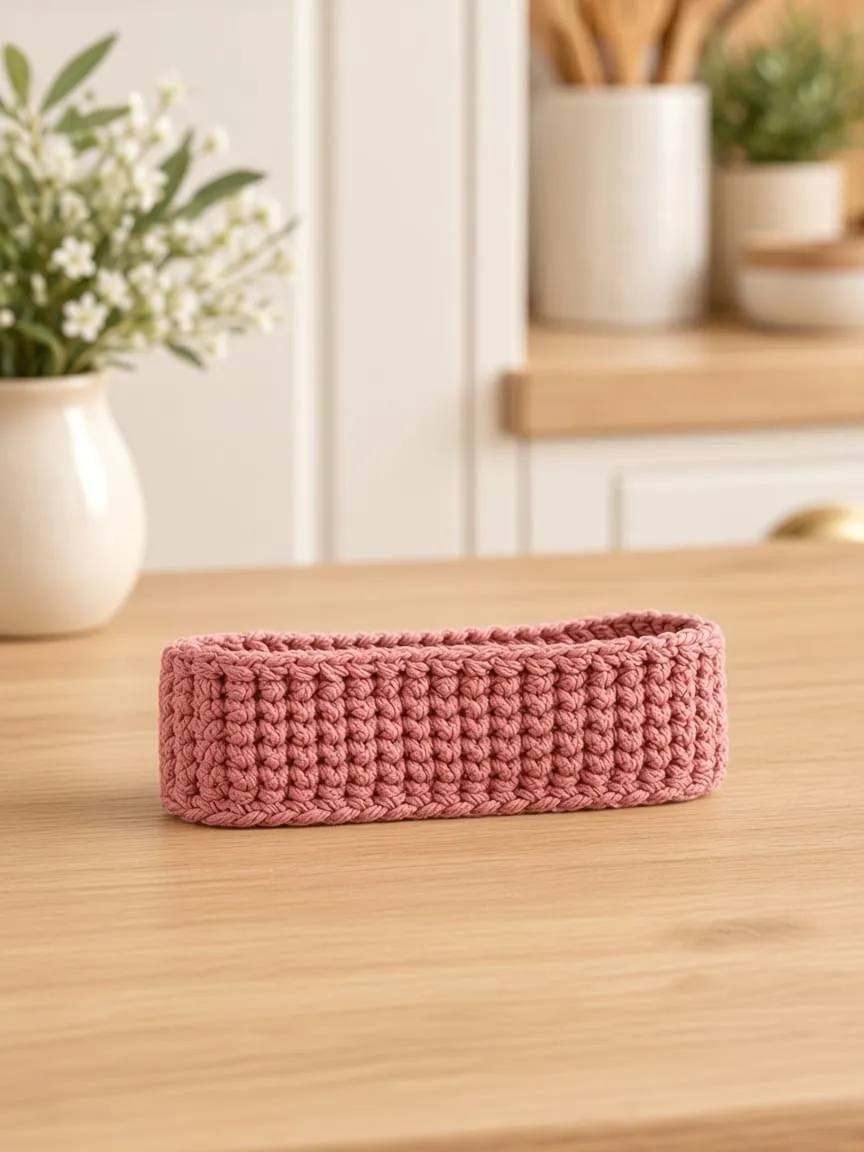
The crochet is a dense rectangle of half double crochet in worsted cotton, color target dusty rose. One unfinished light wooden ring sits at each end of that rectangle. The strap is the short link between them.
There is no third ring, no pair of rings next to each other, and no fold that drapes across a kitchen bar. An older idea for this page did that. Those instructions do not build the holder in the picture.
Why This Design Is Useful
The towel stays off the counter, and it stays off a hot oven door, because the holder hangs from a cool hook instead of wrapping the oven handle. The two rings split the work. The top ring meets the hook. The bottom ring meets the towel.
That is the intention. The strap holds a ring only if the fabric actually traps it, and the towel stays only if it fits the opening. Those two things still have to be checked on a sample.
Finished Product and Construction Overview
The shape, before any row numbers:
- Crochet a dense rectangle in worsted cotton.
- Leave extra rows at each end for the rings. How many is not set.
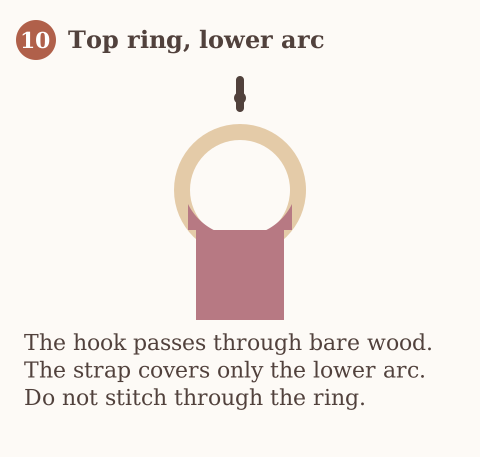
- Close the top extra rows around the lower arc of the top ring. Leave the upper arc bare so the hook can pass through.
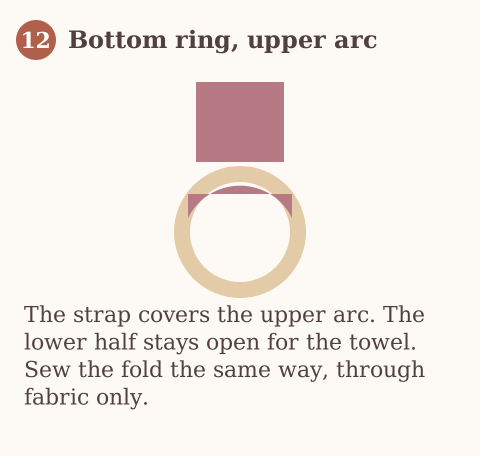
- Close the bottom extra rows around the upper arc of the bottom ring. Leave the lower half open for the towel.
- Sew or crochet those closures through the fabric only, not through the wood.
- Weave the ends.
- Pass the towel through the bottom ring only.
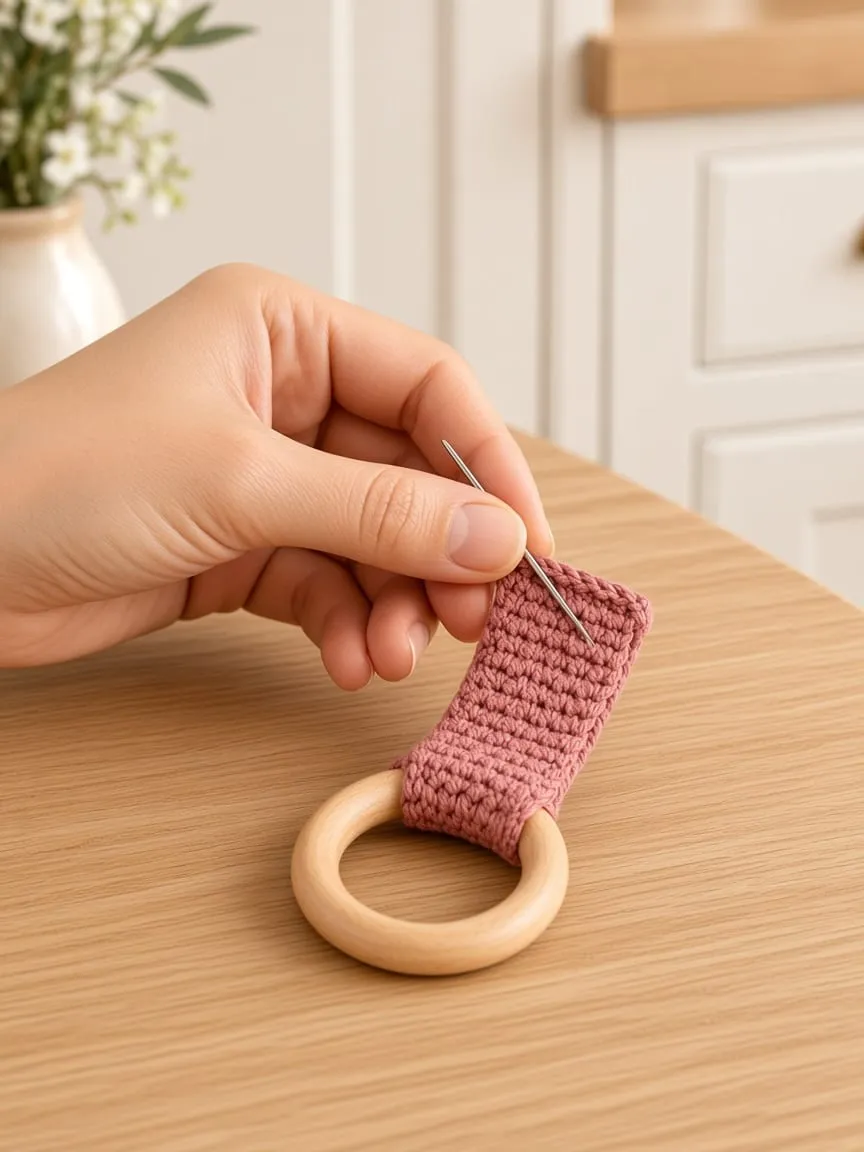
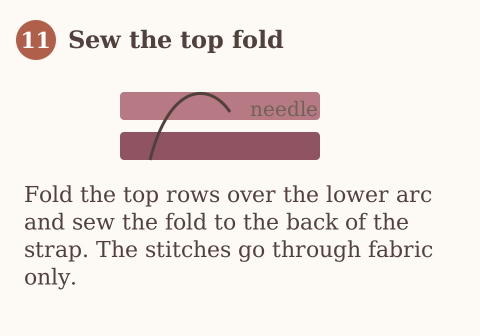
The first sample to make is a sewn fold: the extra rows fold over the ring and a whipstitch closes the fold on the back of the strap. The other method is to crochet those rows with the ring held in the work, so the stitches enclose the same arc. Neither method has been crocheted yet, so neither stitch count is published.
The strap in the illustration is the short proportion. A longer drawing of this same stacked-ring idea was set aside. “About 40% shorter” describes that drawing. It is not a row count.
Materials and Tools
Nothing here has been weighed. Do not buy from a 45 g guess. That figure belonged to a different holder.
| Item | Role |
|---|---|
| 100% worsted cotton, dusty rose | The strap. Amount waits on a finished piece. |
| 4.0 mm hook | The hook to start with. Change it if the swatch misses. Hook chart. |
| Two unfinished wooden rings | One above, one below. About 6 cm outer diameter is the design target, not a ring that has been measured. |
| Tapestry needle | The sewn fold, and the ends. |
| Scissors | |
| Stitch markers | The allowance rows, once those rows exist. |
| Flexible tape | The swatch and the rings. |
| Matching yarn for sewing | Only if the working tail is not the seam. |
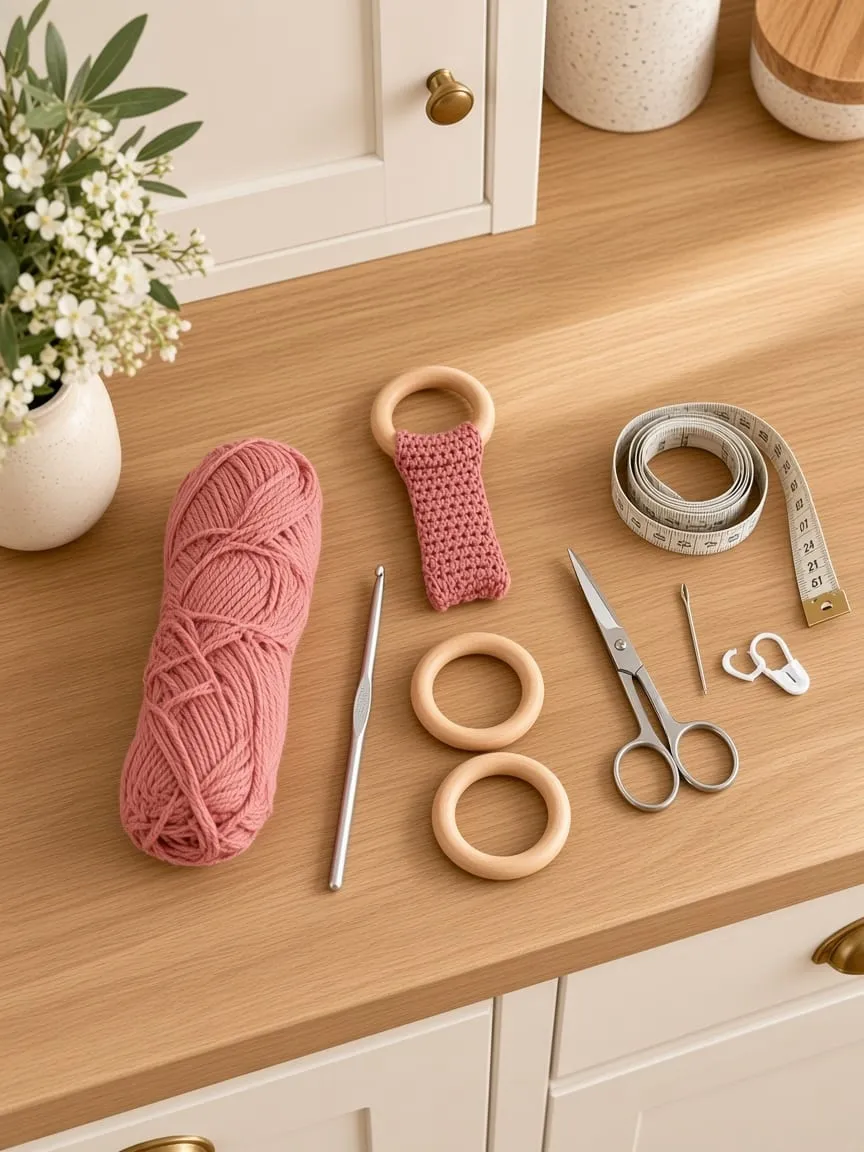
Painted or varnished rings are a poor match for the illustration, and a slick finish is a poor grip. That is a materials preference, not a test. Yarn labels are explained in the yarn weight chart.
Crochet Abbreviations in US Terms
| Abbreviation | US meaning | UK name |
|---|---|---|
| ch | chain | chain |
| hdc | half double crochet | half treble |
| st | stitch | stitch |
The strap is planned in plain half double crochet through both loops. The full chart is Crochet Abbreviations.
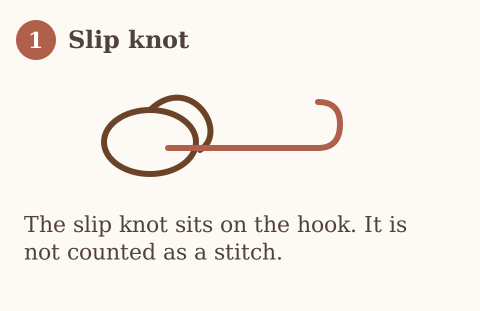
How to Make a Slip Knot
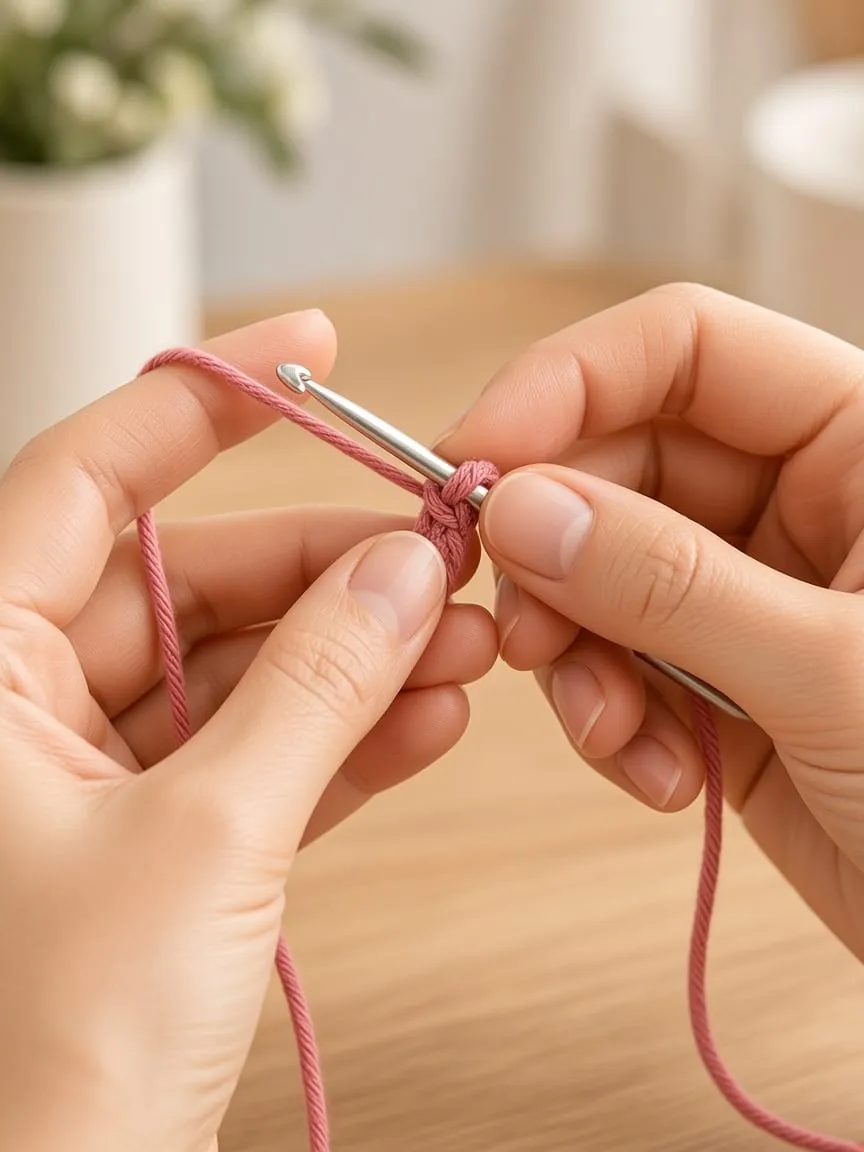
This starts the yarn. It is not a stitch in the foundation count.
- Lay the yarn over itself to make a loop.
- Pull a second loop of working yarn through that loop.
- Put the second loop on the hook and tug the tail until it sits on the hook without slack.
How to Crochet a Foundation Chain
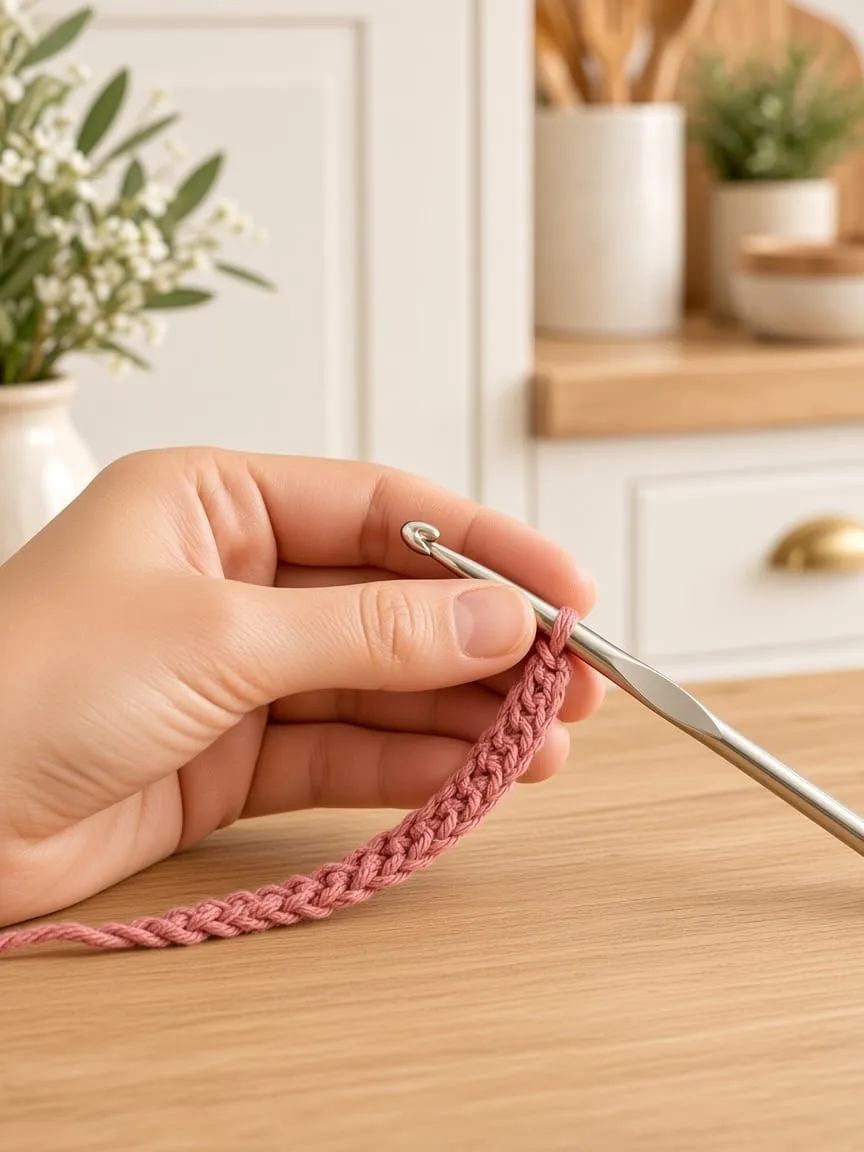
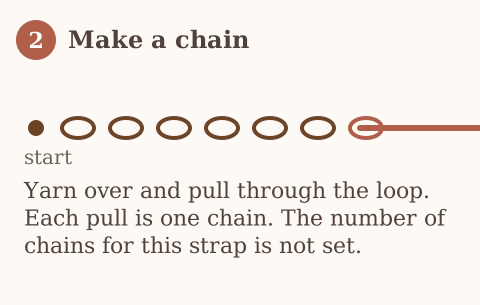
- Yarn over.
- Pull the yarn through the loop on the hook. That is one chain.
- Repeat for the chain the sample eventually sets.
Do not start from a chain count copied off a different towel holder. This strap’s chain is still open, because the width has not been measured from a swatch against the illustration.
How to Make Half Double Crochet
This is the stitch the strap is planned in. The longer lesson is the five basic stitches.
- Yarn over.
- Insert the hook under both loops of the stitch, or under the chain on row 1.
- Yarn over and pull up a loop. Three loops are on the hook.
- Yarn over and pull through all three loops. One loop stays. That is one half double crochet.
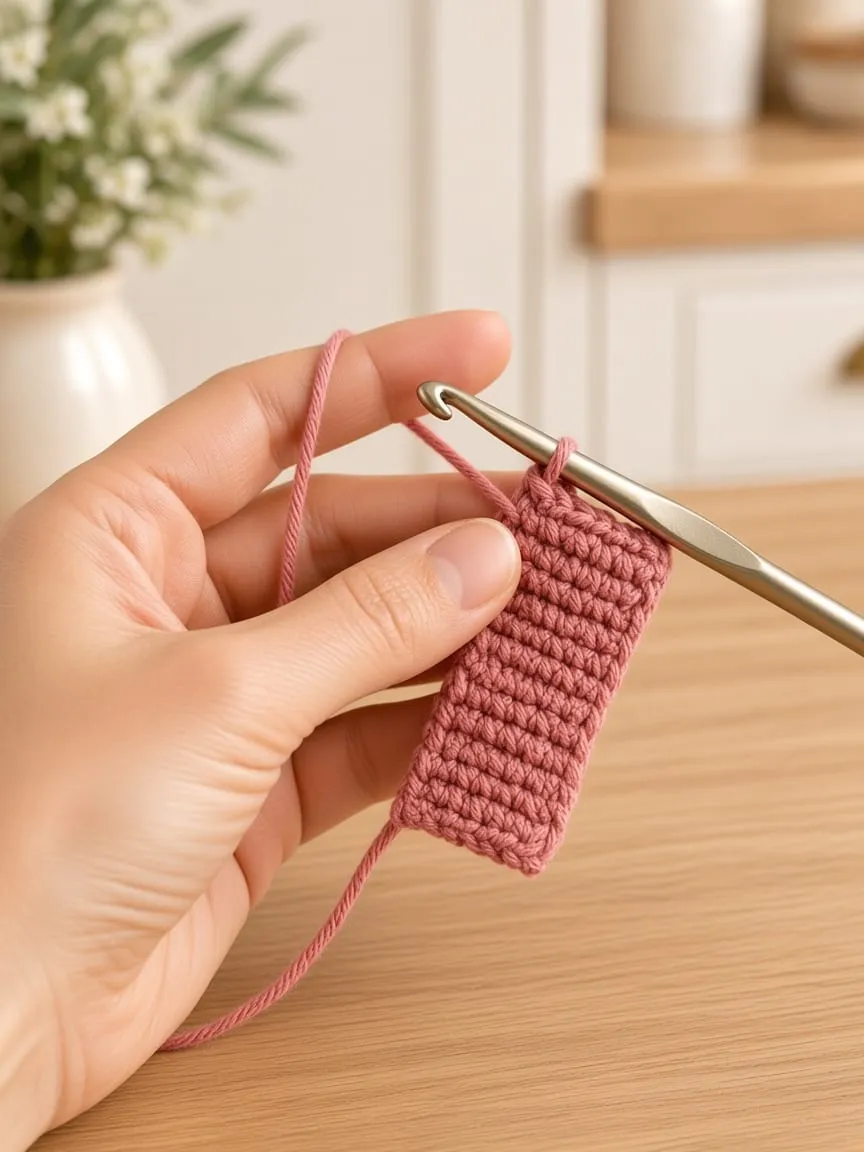
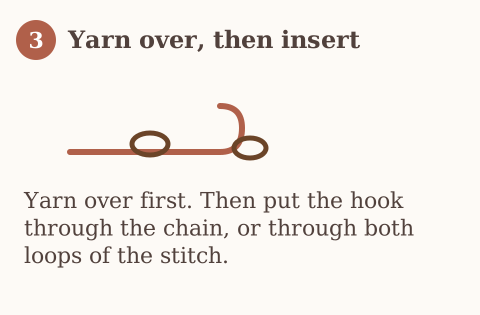
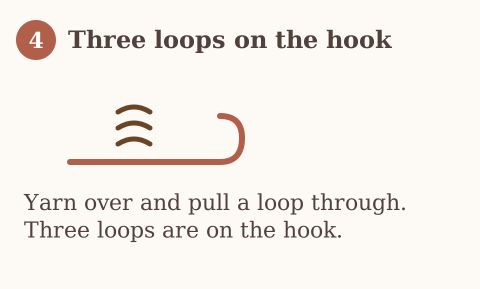
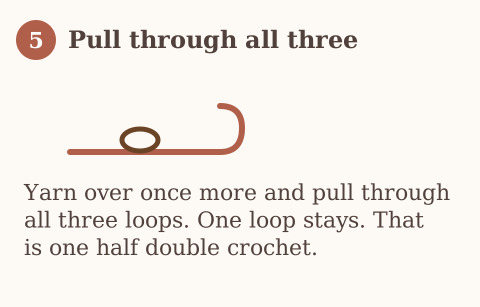
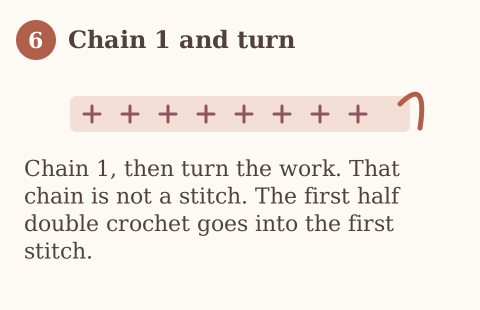
At the end of a row, chain 1 and turn. That chain does not count as a stitch. The first half double crochet of the new row goes into the first stitch. More on edges is in The Turning Chain.
Gauge and Sizing
Make a swatch before you trust a width. The method is in Crochet Gauge.
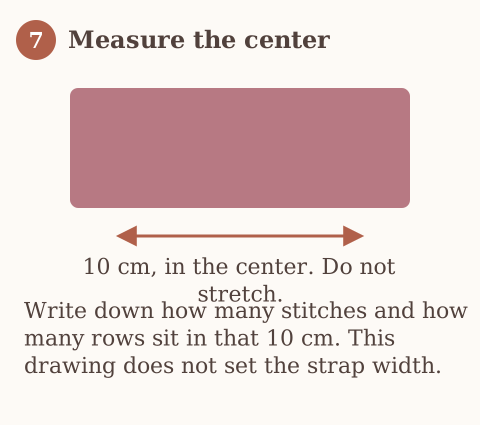
Work a piece larger than 10 cm in this cotton and the hook you plan to use. Measure the center 10 cm without stretching. Write down stitches and rows. If the fabric looks looser than the illustration, use a smaller hook. If it looks stiff and closed-in, use a larger one. The illustration has not been measured with a tape, so this is a visual match until a sample exists.
No finished width or length is stated here.
Planning Your Shorter Strap
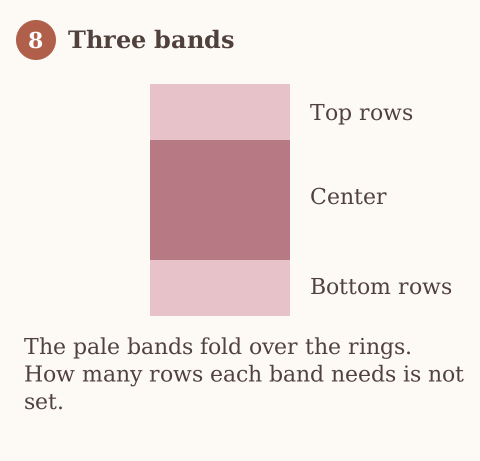
When a sample is approved, the length splits into three bands:
- Extra rows that close over the top ring.
- The visible strap between the rings.
- Extra rows that close over the bottom ring.
Until those bands are known, stop at the swatch. The illustration shows a compact strap, shorter than the first long drawing of this same holder, at the same width and the same ring size as that drawing. The drawing was not measured, so there is no centimeter here to turn into rows.
Making the Rectangular Strap: Row-by-Row Instructions
The row list is waiting on the swatch. What is already fixed is the shape of the work, not the numbers.
- Foundation chain: not set.
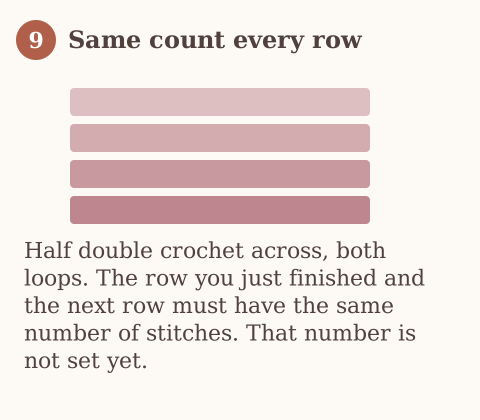
- Row 1: half double crochet in the second chain from the hook and in each chain across. The count has to match on every later row.
- Later rows: chain 1, turn, half double crochet in both loops of each stitch.
- The last rows at each end are the ring allowances. Their row numbers are not set.
- Count the end of every row. A strap that gains or drops a stitch will not meet the ring evenly.
Fasten off only when the length matches the approved sample. If the seam is the sewn fold, leave a tail long enough to sew one end. That length is part of the open seam check.
Attaching the Top Wooden Ring
The top ring hangs on the hook. The strap has to hold the ring without covering the wood the hook needs.
The sample to try first: fold the top allowance over the lower arc of the ring and sew that fold to the back of the strap. The stitches go through crochet only. The upper arc stays bare.
The alternate: crochet the allowance with the ring held in the row, so the stitches enclose that same lower arc. Use it only if a sewn sample cannot match the illustration.
A seam that is too short lets the ring slide out sideways. That is why no stitch count is printed for the seam yet.
Attaching the Bottom Wooden Ring
The bottom ring carries the towel. The strap covers the upper arc. The lower half stays open.
Use the same method as the top, mirrored. A sewn fold is again the first sample. The stitches still do not go through the wood.
Securing and Hiding Yarn Ends
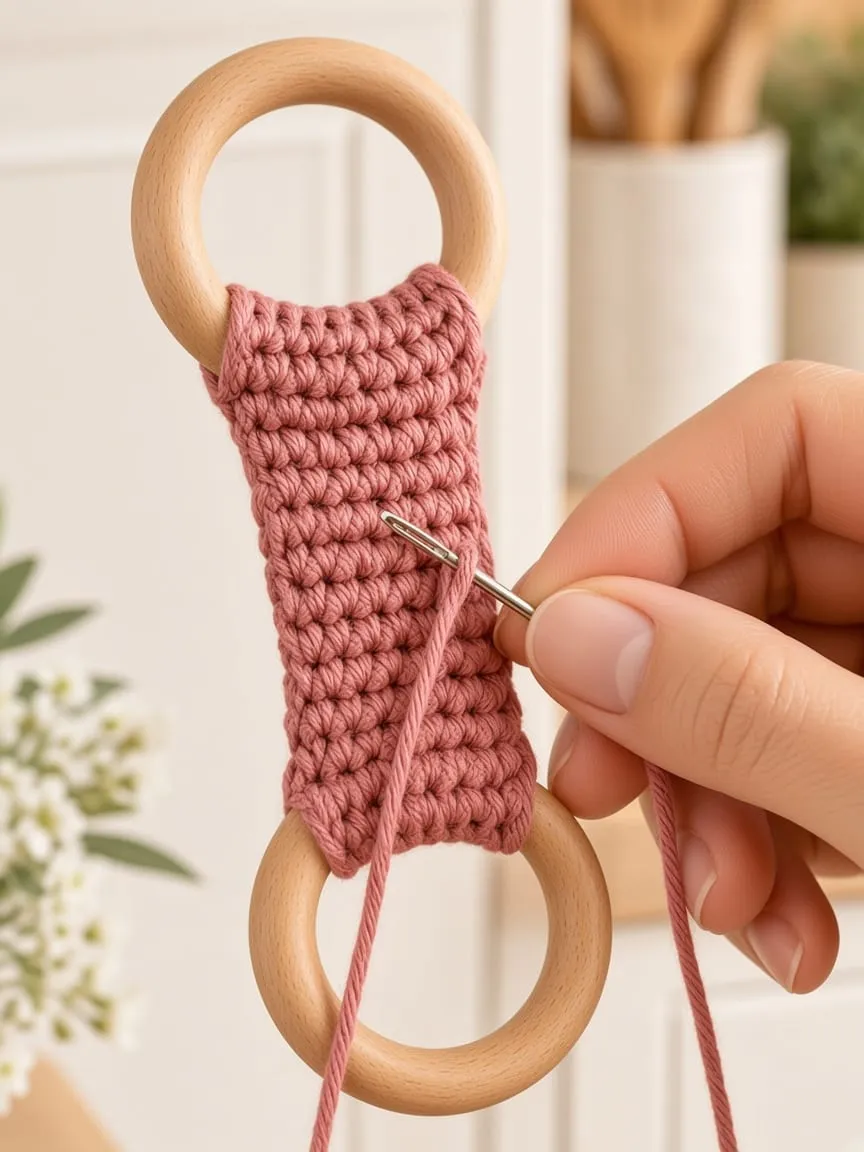
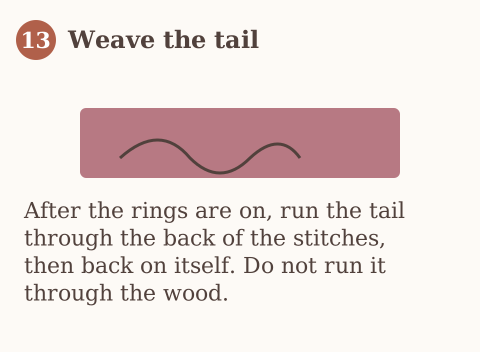
Weave ends after the rings are on, so a tail you still need for sewing is not buried early. The site’s notes are in Weaving In Ends.
Run the tail through the back of the stitches, then back on itself for a short distance, and trim. Do not run the tail through the wood. Steam the strap from a distance if it curls. Do not iron the stitches flat.
Inserting a Towel Through the Bottom Ring
Pass the towel through the bottom ring only. The top ring is for the hook. Bring the two ends of the towel even so the ring sits in the fold.
If the towel will not go in, the ring is too small for that towel, or the seam has closed the opening. Do not fix that by adding a second ring beside the first. That would be a different holder.
Hang it and watch it. A damp towel weighs more than a dry one. This page does not report that test.
Troubleshooting and Fit Adjustments
| What you see | What it may mean | What to change once a sample exists |
|---|---|---|
| The ring slides out of the end | The allowance is too short, or the seam missed the fold | More allowance, or a deeper seam. Not decided yet. |
| The hook will not enter the top ring | Fabric covers the upper arc | Move the fold to the lower arc. |
| The towel will not enter | The seam closed the lower half, or the ring is small for that towel | Open the lower half, or use a towel that fits the real inner diameter. |
| The strap twists | The stitch count changed at an edge | Recount and pull back to an even row. |
| The strap walks off the hook | The hook is slick, or the ring is varnished | A different cool hook. Cotton is not a promise that every hook will grip. |
Customization
Color can change. The construction should not, until a sample says a change is safe. Keep one ring above and one below. Do not add a button, a third ring, or a fold over the rail and still call it this holder.
A wider or longer strap needs a new swatch and a new check that each ring still sits in its fold.
Washing and Care
Cotton can be washed. A long soak with wooden rings has not been tried on this assembly. Until a sample has been washed, the careful version is: wash cool, dry flat, keep the holder off heat, and do not refinish the rings with a slick varnish.
Frequently Asked Questions
Are the two rings side by side?
No. One ring is above the strap and one is below. A holder that folds over a bar, with two rings next to each other, is a different object. Its stitch counts do not build this one.
Can I follow a row count today?
No. The chain, the rows, and the seam stay unpublished until a sample is measured.
Will it keep a towel from falling?
That is the aim. It is not a result. It depends on the inner size of the bottom ring, the towel, and a seam that has not been sewn on a sample yet.
Can I hang it on the oven?
Only when the oven is cold and the bar itself stays cool. Do not hang it where the handle heats up.
Crochet Explained Premium Printable PDF
Prefer a Printable Step-by-Step Pattern?
A premium PDF is planned for this holder: the row-by-row tutorial, close-up stitch guidance, assembly references, and a printable sheet. That file is not for sale. There is no listing link until a sample is approved and a real Etsy address exists.
More Crochet Kitchen Projects
These are separate projects. They do not share this holder’s construction.
- A hanging plastic bag holder for the same room, with a different shape.
- A Christmas tree bag holder if the bags should come out of a trunk.
- A garlic holder for whole dry bulbs, loaded from the top.
- A bowl cozy for the table.
- A mug cozy if you want a small cotton project with a known closure.
Gauge, if you have not swatched yet, is Crochet Gauge.
- towel holder
- kitchen
- cotton
- beginner
Read this next
- How to Crochet a Christmas Tree Garlic Holder A small mesh garlic holder with scalloped branches, a gold star, and an open top. US terms. Sizes are design targets.
- How to Crochet a Christmas Tree Plastic Bag Holder Crochet a hollow Christmas tree that holds grocery bags. Bags go in the open top and out the brown trunk. US terms. Sizes come from gauge.
- How to Crochet a Hanging Plastic Bag Holder for Your Kitchen Crochet a pale yellow mesh grocery-bag holder with a front oval, two straps, and three lemons. US terms, with diagrams.